Your answer: Netherlands → Japan
Japan uses Type A, B; your Netherlands plug (Type C, F) doesn't fit. Pack a Type A/B adapter — or a universal one if you travel often.
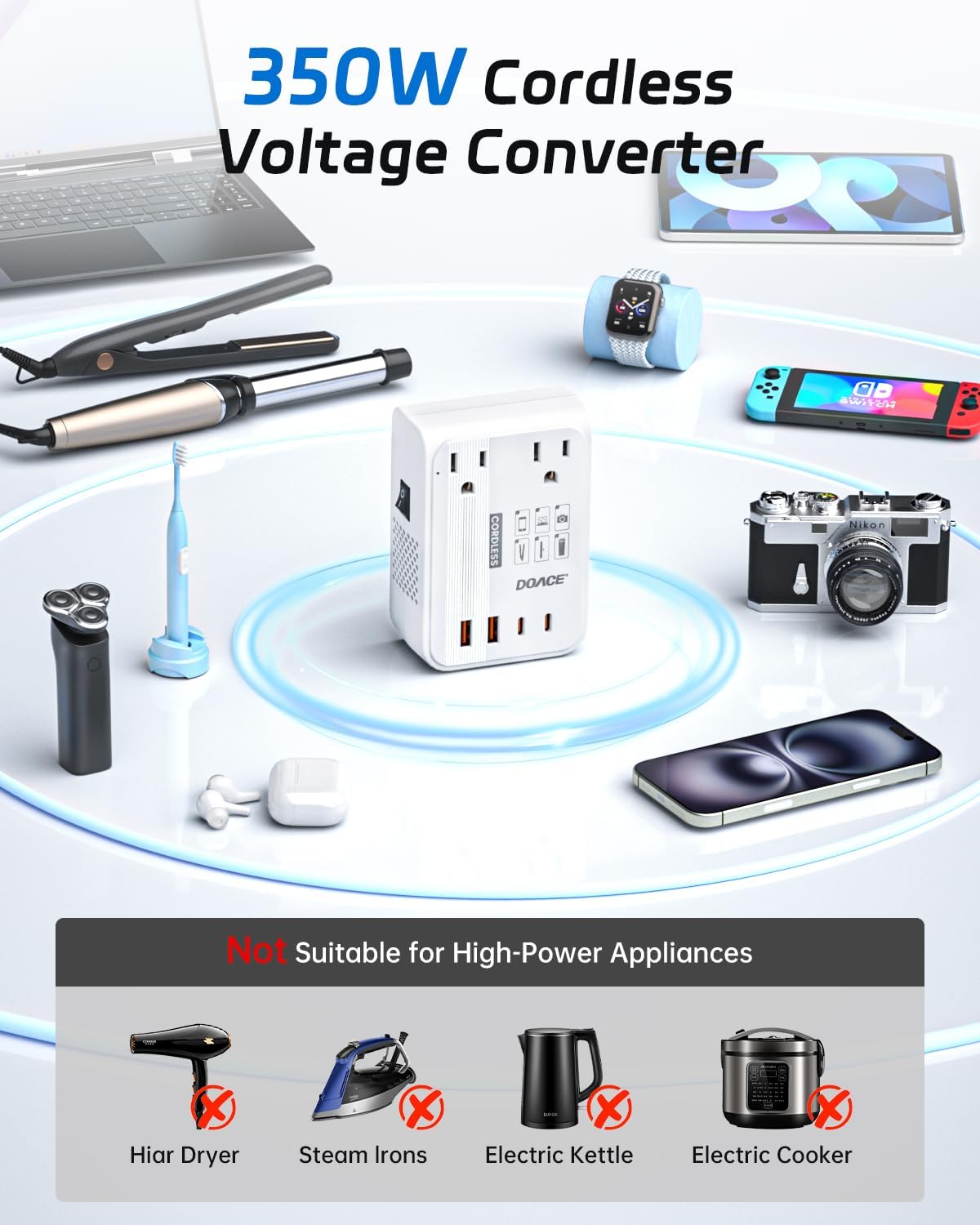
Netherlands uses 230V; Japan uses 100V. Most phones, laptops, tablets, and modern chargers are dual-voltage (check for "100-240V" on the label) and will work with just a plug adapter. Single-voltage devices — hair dryers, curling irons, kettles — will either need a voltage converter or a dual-voltage travel version.
Which of your devices will work?
Your destination is on a different voltage standard, but that doesn’t automatically mean you need a voltage converter. Most modern electronics are dual-voltage — check the label on the charger for something like INPUT 100–240V. Here’s what typically falls where:
Safe with just a plug adapter
Phones, laptops, tablets, e-readers, wireless earbuds (USB-charged cases), most modern camera battery chargers, and most electric toothbrush chargers. These are almost all dual-voltage. Look for "100–240V" on the charger brick to confirm.
- Phone
- Laptop
- Tablet
- E-reader
- Earbud case
- Camera charger
- Electric toothbrush
Check the label before you pack
Older camera chargers, some electric shavers, some CPAP machines, and many handheld game consoles. Dual-voltage versions exist but aren’t universal. If the label says only "120V" (or only "230V"), it will not work on the other side without a voltage converter.
- Older camera charger
- Electric shaver
- CPAP machine
- Handheld console
Bring a dual-voltage travel model
Hair dryers, curling irons, flat irons, travel kettles, heating pads, space heaters. These draw high wattage and are usually single-voltage. Don’t use a cheap plug adapter with one of these — you will trip a breaker or destroy the device. Buy a dual-voltage travel version instead.
- Hair dryer
- Curling iron
- Flat iron
- Travel kettle
- Heating pad
What this means for your trip
Going from Netherlands to Japan you'll need both a plug adapter and a plan for voltage. Here's exactly what that means for the stuff in your carry-on.
Japan uses Type A/B outlets; Netherlands uses Type C/F. The shapes are incompatible, so every plug you bring needs a Type A/B adapter to reach the socket. The cheapest option is a simple shape-only adapter for that one country; if you travel often, a universal adapter (fits every country) pays for itself in a single trip.
Netherlands runs on 230V; Japan runs on 100V. That's the bigger-than-it-sounds part. Most modern electronics are "dual-voltage" — their chargers are rated 100-240V and handle either standard automatically. You'll find that rating printed on the brick. Phones, laptops, tablets, camera battery chargers, electric toothbrushes, and wireless earbud cases almost always qualify. Hair dryers, curling irons, flat irons, travel kettles, and space heaters almost always do not: they're single-voltage, high-wattage, and plugging them into the wrong side will either trip a breaker or destroy the device. Bring a dual-voltage travel version instead of a converter whenever you can — converters for high-wattage heat devices are bulky and not all that reliable.